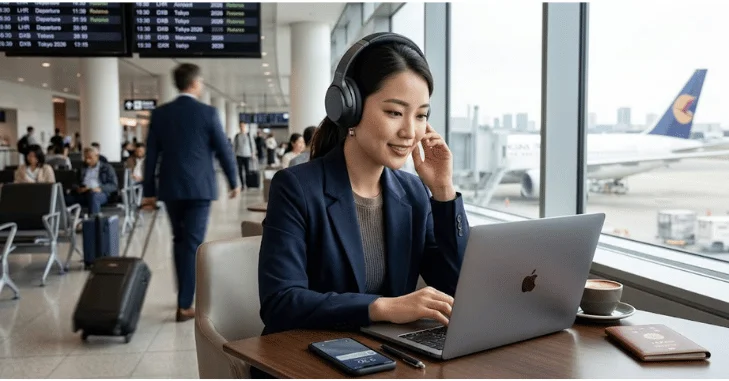
The best noise-cancelling headphones for most people in 2026 are the Sony WH-1000XM6. They combine excellent noise isolation with strong call quality, a foldable travel-friendly design, multipoint Bluetooth, and up to 30 hours of rated battery life with ANC enabled. Choose Bose instead if maximum quiet and long-session comfort matter more than all-around versatility.
This TechRiyon guide is a research-based buying shortlist, not a laboratory test. We compared current expert testing with manufacturer specifications and U.S. pricing checked on August 19, 2026. Prices may change after publication.
| Rank | Headphones | Best for | Current U.S. price | Battery claim | Main strength |
|---|---|---|---|---|---|
| 1 | Sony WH-1000XM6 | Most buyers | $398 sale price | Up to 30 hours with ANC | Excellent all-around isolation |
| 2 | Bose QuietComfort Ultra Headphones, 2nd Gen | Quiet and comfortable | $399 sale price | Up to 30 hours | Strong ANC and comfortable fit |
| 3 | AirPods Max 2 | Apple users and frequent flyers | $549 | Up to 20 hours | Apple features and improved ANC |
| 4 | Bowers & Wilkins Px7 S3 | Sound quality | $479 | Up to 30 hours | Detailed sound and aptX Lossless |
| 5 | Soundcore Space One | Budget buyers | $99.99 | Up to 40 hours with ANC | Strong value and long battery life |
Manufacturer prices and battery specifications were checked on August 19, 2026. Sony and Bose were discounted when checked, so their prices may change first.
TL;DR
- Best overall: Sony WH-1000XM6
- Best for maximum quiet and comfort: Bose QuietComfort Ultra Headphones, 2nd Gen
- Best for Apple users: AirPods Max 2
- Best for sound-focused buyers: Bowers & Wilkins Px7 S3
- Best under $100: Soundcore Space One
Best Noise Cancelling Headphones: Quick Comparison
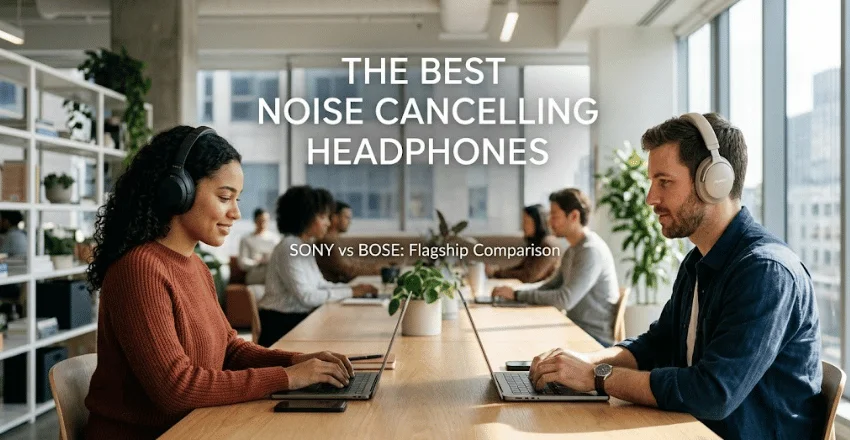
Sony and Bose are the two strongest flagship choices if reducing outside noise is your main goal. RTINGS currently ranks the WH-1000XM6 first for noise isolation, while Tom’s Guide favors the second-generation Bose QuietComfort Ultra for top-tier ANC and comfort.
That distinction matters. Sony offers the better all-around package for most buyers, while Bose makes more sense when quiet and comfort take priority over everything else.
1. Sony WH-1000XM6: Best Overall
The WH-1000XM6 takes the top spot because it has few meaningful weaknesses. RTINGS found that it reduces a broad range of noise, including airplane rumble and office chatter. Its test battery also lasted for more than 31 hours with ANC enabled.
Sony rates the headset for up to 30 hours of battery life with noise cancellation active. It supports multipoint connections and can switch between compatible devices. The folding design also makes it easier to pack than Sony’s previous flagship model.
Pros
- Excellent isolation across a range of environments
- Strong microphone and call performance
- Foldable design that suits frequent travel
- Multipoint connectivity
- Wired listening support
Cons
- Premium price
- Fit can affect isolation performance
- Buyers focused mainly on comfort may prefer Bose
RTINGS notes that glasses and physical fit can affect isolation results. For that reason, trying the headphones during a retailer’s return period is worthwhile.
Who should buy them: Choose the XM6 if you want one premium pair for flights, commuting, calls, office work, and everyday music listening.
2. Bose QuietComfort Ultra Headphones, 2nd Gen: Best for Quiet and Comfort
Bose is the stronger alternative for buyers who prioritize noise reduction. Tom’s Guide ranks the second-generation QuietComfort Ultra highly for ANC and comfort. What Hi-Fi also identifies it as one of the leading choices for serious noise cancellation.
Bose rates battery life at up to 30 hours. A 15-minute quick charge can provide about three hours of playback. The official U.S. price was $399 at the time of checking.
Pros
- Excellent ANC
- Comfortable for long listening sessions
- Useful quick-charging feature
- Strong transparency and immersive-audio options
Cons
- Still expensive, even when discounted
- Default tuning may sound bass-heavy to some listeners
- Sony offers a broader mix of travel and call features
Tom’s Guide specifically notes the bass-heavy default sound. You can adjust the tuning through the Bose app if that balance does not suit your preferences.
Who should buy them: Choose Bose for long flights, open offices, and situations where comfort and quiet matter more than everything else.
3. AirPods Max 2: Best for Apple Users and Frequent Flyers
Apple’s second-generation AirPods Max is a much more competitive ANC option than its predecessor. Apple says the H2-powered model provides up to 1.5 times more active noise cancellation than the previous generation.
AirPods Max 2 starts at $549 in the United States and offers up to 20 hours of listening time. Its biggest advantage is its tight integration with Apple devices and services.
Tom’s Guide recommends it for frequent flyers, while What Hi-Fi praises its improved ANC and Apple-focused features. Both also identify its shorter battery life as a disadvantage compared with Sony and Bose.
Pros
- Strong ANC
- Excellent integration with Apple devices
- Spatial audio features
- Premium construction
- Wired lossless listening through USB-C
Cons
- $549 starting price
- Only 20 hours of rated battery life
- Heavy compared with several rivals
- Smart Case still provides limited physical protection
Who should buy them: AirPods Max 2 makes the most sense for iPhone, Mac, and iPad owners who value Apple’s ecosystem features enough to accept the higher price and shorter battery life.
4. Bowers & Wilkins Px7 S3: Best for Sound Quality
The Px7 S3 is the sound-focused choice in this lineup. Bowers & Wilkins lists aptX Lossless support, 40mm bio-cellulose drivers, and up to 30 hours of playback. Its current U.S. price is $479.
Tom’s Guide places the Px7 S3 among its strongest options for commuters and sound-focused listeners. It combines detailed wireless audio with capable ANC and a comfortable over-ear design.
Pros
- Detailed, refined sound
- aptX Lossless Bluetooth support
- Up to 30 hours of playback
- Comfortable premium design
Cons
- Costs more than Sony and Bose at their current sale prices
- Pure ANC performance is not its main advantage
- Best suited to buyers who prioritize music quality
If blocking as much outside noise as possible is your first priority, Sony or Bose has stronger comparative evidence. Choose the Bowers & Wilkins model when audio quality matters as much as, or more than, maximum noise cancellation.
5. Soundcore Space One: Best Budget Pick
You do not need to spend $400 to get useful ANC. Soundcore’s Space One costs about $99.99 and offers up to 40 hours of battery life with ANC active. Battery life increases to up to 55 hours with noise cancellation switched off.
The headset also offers adjustable transparency, app controls, multipoint connectivity, and an AUX connection. Independent buying guides continue to place the Space One among the stronger budget options.
Pros
- Costs around $100
- Up to 40 hours of battery life with ANC
- Multipoint support
- Wired connection
- Adjustable transparency levels
Cons
- Does not match flagship models for isolation across every type of noise
- Materials and sound tuning feel less premium
- Frequent flyers may benefit from spending more
Who should buy them: Choose the Space One if you want useful noise cancellation for commuting, studying, or office work without paying flagship prices.
Match the Headphones to the Noise Around You
A specification sheet cannot tell you which pair best fits your daily routine. Start by identifying the type of noise you hear most often.
| Your environment | What matters most | Best match |
| Airplane or train | Low-frequency ANC, comfort, battery life | Sony or Bose |
| Open office | Voice reduction, calls, multipoint | Sony |
| Apple-focused travel setup | ANC plus Apple features | AirPods Max 2 |
| Music-focused listening | Sound quality and codec support | Bowers & Wilkins |
| Commute on a sub-$100 budget | Battery life and value | Soundcore |
This use-case matrix is our synthesis of the current specifications and independent test results discussed above. It helps separate what is “best on paper” from what is best for the noise you encounter.
Understand What ANC Can and Cannot Block
Active noise cancellation works best against steady, low-frequency sounds. Examples include aircraft engines, road noise, trains, and air-conditioning systems.
Bose explains that sudden, high-frequency sounds are harder to suppress completely. Passive isolation from the ear cups and a secure fit also work alongside ANC.
That means you may still hear nearby voices, keyboard strikes, doors slamming, or dogs barking. Good ANC reduces distractions, but it does not create complete silence.
If the main distraction comes from your desktop rather than the room itself, address the source as well. TechRiyon’s guide to diagnosing a loud computer fan can help you remove the noise instead of merely masking it.
Prioritize Comfort Before Extra Features
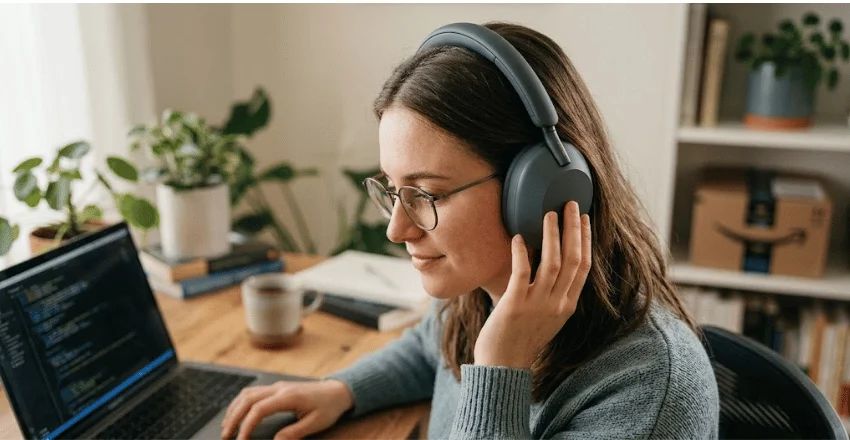
ANC is less useful if the headset becomes uncomfortable after an hour. Check the clamping pressure, ear-cup depth, weight, padding, and heat buildup before committing to a pair.
Fit can also affect noise isolation. RTINGS found that physical factors, such as wearing glasses, can affect the WH-1000XM6’s isolation performance.
If possible, buy from a retailer with a practical return window. Wear the headphones through a normal work or travel session before deciding whether to keep them.
Check Battery Life, Multipoint, and Wired Support
Frequent travelers should look beyond the headline battery number. Check whether the advertised figure includes ANC use.
Multipoint connectivity is useful if you regularly switch between a laptop and a phone. A 3.5mm connection can also matter on airplanes and when using older equipment.
For a cleaner desk setup, pair your headset with peripherals that reduce unnecessary cable clutter. TechRiyon’s wireless keyboard and mouse guide covers workstation options and the features that matter most.
Over-Ear Headphones or ANC Earbuds?
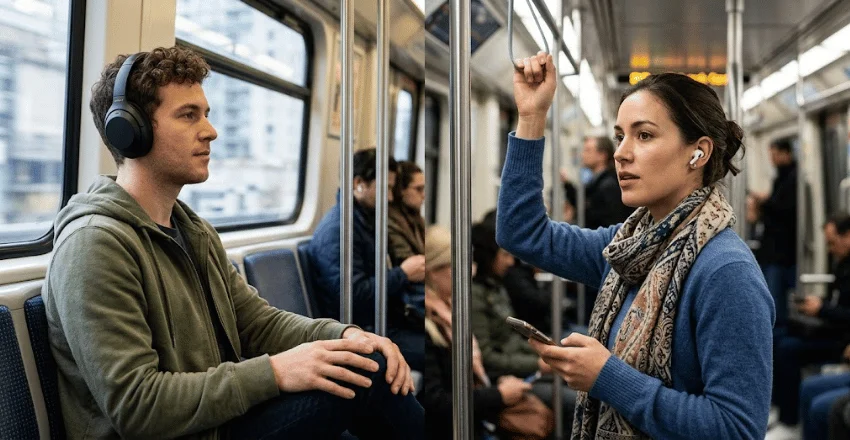
Over-ear models usually give manufacturers more room for larger batteries and substantial ear-cup padding. Earbuds are easier to carry and can still provide strong noise cancellation when they create a secure seal.
Your choice should depend on comfort and portability rather than size alone. If you prefer compact in-ear models, TechRiyon’s Beats Fit Pro vs. AirPods Pro comparison is a useful next read.
The Verdict
Buy the Sony WH-1000XM6 if you want the safest all-around choice. Its combination of isolation, call quality, travel-friendly design, connectivity, and battery life makes it the easiest flagship model to recommend.
Choose Bose if long-session comfort and maximum quiet matter most. Pick Soundcore if your budget is close to $100. Apple users may find AirPods Max 2 worth the premium for its ecosystem features, while sound-focused listeners should consider the Px7 S3.
Before buying, check the current price and return policy for your preferred model. Then browse TechRiyon’s Gadgets and Apps section for more buying guides and device comparisons.
FAQ
The Sony WH-1000XM6 is our top overall recommendation. RTINGS currently ranks it first for noise isolation, and its combination of ANC, call quality, portability, connectivity, and battery life makes it the most balanced flagship choice. The Bose QuietComfort Ultra Headphones, 2nd Gen, is the better alternative if quiet and comfort are your top priorities.
Both sit near the top of current independent testing. Sony is the stronger all-around recommendation, while Bose is particularly compelling for comfort and dedicated ANC performance. Your preferred fit may ultimately determine which one is better for you.
No. ANC works best against steady, low-frequency sounds. Voices and sudden, higher-frequency noises can still come through, although good passive isolation helps reduce them.
Around $100 can buy useful ANC, as the Soundcore Space One demonstrates. Spending closer to $400 generally gets you stronger isolation, better microphones, improved comfort, and more polished features from brands such as Sony and Bose.
They can be valuable in open offices, shared homes, and noisy commuting environments. They are most effective when your distractions include steady background noise.
If one device is creating most of the noise, fixing that device may be the better first move. A rattling PC fan is a good example.