Introduction
When shopping for a high-quality television or display, consumers are often faced with a critical choice: OLED vs. QLED. These two leading technologies represent the pinnacle of modern display engineering, each offering unique strengths tailored to different viewing environments and user preferences. OLED (Organic Light Emitting Diode) is renowned for its ability to produce perfect blacks, infinite contrast, and ultra-thin designs, making it a favorite for cinematic and immersive viewing.
On the other hand, QLED (Quantum Dot LED), developed primarily by Samsung, delivers exceptional brightness, vibrant colors, and greater resistance to image burn-in, making it ideal for bright rooms and everyday use. Understanding the differences between these technologies is essential for making an informed decision that matches your lifestyle, content habits, and budget.
| Aspect | OLED (Organic Light Emitting Diode) | QLED (Quantum Dot LED) |
| Technology Type | Self-emissive pixels that emit their own light, no backlight needed | LED-backlit LCD enhanced with quantum dot layer |
| Picture Quality | Perfect blacks, infinite contrast, exceptional color accuracy | Brighter images, vibrant colors, excellent HDR performance |
| Ideal Viewing | Best for cinematic and dark-room environments | Best for bright rooms and daylight viewing |
| Design | Ultra-thin, flexible panels | Thicker due to backlighting |
| Durability | Susceptible to burn-in over time | More resistant to burn-in, longer lifespan |
| Cost | Typically more expensive | Generally more affordable, especially at larger sizes |
| User Preference | Ideal for pure picture quality and immersive experiences | Ideal for brightness, durability, and value |
OLED vs. QLED
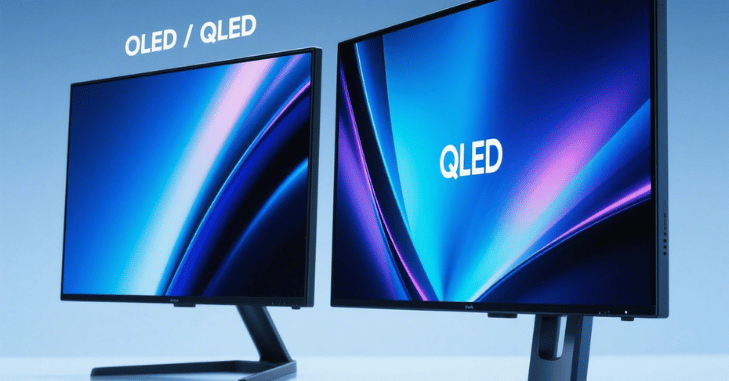
OLED vs. QLED represents a key decision point for consumers seeking high-quality displays, as both technologies offer distinct advantages depending on usage and preferences. Thanks to its self-emissive pixel technology, OLED excels in delivering perfect blacks, infinite contrast, and superior viewing angles, making it ideal for cinematic experiences and dark-room environments. In contrast, QLED relies on a backlit LCD panel enhanced with quantum dots, which allows for brighter images, vibrant colors, and better performance in well-lit rooms.
While OLED offers a more refined picture with true blacks, it can be prone to burn-in with prolonged static images. QLED, on the other hand, is less susceptible to image retention, often has a longer lifespan, and tends to be more affordable, especially in larger screen sizes. Ultimately, the choice between OLED and QLED depends on your environment, content preferences, and budget. OLED is ideal for pure picture quality, while QLED offers brightness and value.

What is OLED?
OLED, or Organic Light Emitting Diode, is a cutting-edge display technology where each individual pixel emits its own light, eliminating the need for a separate backlight. This self-emissive nature allows OLED screens to achieve perfect black levels, as pixels can turn off completely when not in use, resulting in infinite contrast ratios and highly immersive visuals.
OLED panels are also known for their exceptional color accuracy, wide viewing angles, and ultra-thin, flexible designs, making them ideal for both premium TVs and high-end smartphones. However, because OLED uses organic materials, it can be more susceptible to image retention or burn-in over time, especially with static content.
Key Features of OLED
- Self-Emissive Pixels: Each pixel emits its own light, eliminating the need for a backlight.
- True Blacks: OLED pixels can turn off completely, delivering perfect blacks.
- Ultra-Thin Panels: Without backlights, OLED panels are thinner and more flexible.
- Infinite Contrast Ratio: Thanks to total black and bright whites side by side.
- Wider Viewing Angles: Minimal color and brightness degradation at angles.
What is QLED?
QLED, or Quantum Dot Light Emitting Diode, is a display technology primarily developed by Samsung that enhances traditional LED-LCD panels using a layer of quantum dots, tiny semiconductor particles that emit precise colors when exposed to light.
Unlike OLED, which uses self-emissive pixels, QLED displays rely on an LED backlight that shines through an LCD panel and the quantum dot layer. This setup allows QLED screens to achieve brighter images, sharper colors, and improved energy efficiency, making them especially suitable for bright viewing environments.
Key Features of QLED
- Quantum Dot Enhancement: QLED technology uses a quantum dot layer that significantly boosts color accuracy and brightness for more vivid and lifelike images.
- Backlit Structure: Unlike OLED, QLED displays use an LED backlight behind an LCD panel instead of self-emissive pixels.
- High Brightness: This backlighting system enables QLEDs to achieve higher brightness levels, making them ideal for well-lit or sunny environments.
- Longevity: QLED panels typically have a longer lifespan and are less prone to image retention or burn-in compared to OLEDs.
- Cost-Effective: QLED TVs are usually more affordable, especially at larger sizes, offering excellent value for those seeking big-screen performance on a budget.
OLED vs QLED: Key Differences
| Feature | OLED | QLED |
| Technology | Organic, self-emissive pixels | LED-backlit with quantum dot film |
| Black Levels | Perfect blacks (pixels turn off) | Deep blacks (but backlight can bleed) |
| Brightness | Excellent, but slightly lower than QLED | Extremely bright, ideal for lit rooms |
| Contrast | Infinite contrast | Very high, but not infinite |
| Color Accuracy | Exceptional, especially in dark scenes | Outstanding with vibrant HDR performance |
| Viewing Angles | Wide angles with minimal distortion | Narrower, some loss in color/brightness |
| Burn-In Risk | Possible over time (e.g., static logos) | No risk of permanent burn-in |
| Panel Thickness | Thinner and more flexible | Thicker due to backlight |
| Price Range | Typically more expensive | Generally more affordable |
| Longevity | Slightly shorter due to organic materials | Longer, especially with static content |

OLED: Pros and Cons
Pros
- Perfect blacks and infinite contrast
- Ultra-thin design
- Superior viewing angles
- Great for cinematic and dark-room use
Cons
- Lower peak brightness than QLED
- Risk of image burn-in
- Typically more expensive
QLED: Pros and Cons
Pros
- Brighter display, ideal for well-lit rooms
- No risk of burn-in
- Better for static content (e.g., sports tickers, games)
- Often more budget-friendly for larger screens
Cons
- Inferior black levels
- Limited viewing angles
- Thicker and heavier panels
Ideal Use Cases
| Usage Scenario | Recommended Technology |
| Home Theater (Dark Room) | OLED |
| Bright Living Room TV | QLED |
| Gaming with Static HUDs | QLED (safer) |
| Professional Color Work | OLED |
| Budget Large-Screen TV | QLED |
Outlook
OLED and QLED are both evolving rapidly, with innovations that aim to overcome their respective limitations. On the OLED front, newer variants like QD-OLED and MicroLED are emerging. QD-OLED (Quantum Dot OLED) combines the perfect black levels and contrast of traditional OLED with the higher brightness and color accuracy associated with QLED technology, thanks to the integration of quantum dots.
MicroLED, another cutting-edge advancement, uses self-emissive inorganic LEDs that deliver OLED-like blacks with even greater brightness, longevity, and resistance to burn-in. Meanwhile, QLED technology is also advancing, particularly through the introduction of Mini-LED backlighting.
Which Should You Choose?
Choose OLED if
- You want the best image quality and perfect blacks.
- You watch a lot of movies or use your screen in a dark room.
- You value design and thinness.
Choose QLED if
- You need high brightness for daylight viewing.
- You play games or watch content with static UI elements.
- You want a large screen at a lower price point.
Conclusion
In the battle between OLED vs. QLED, there is no universal winner, only the right choice based on individual needs. OLED stands out with its unmatched contrast, deeper blacks, and sleek, modern designs that offer a truly premium viewing experience, especially in dark environments. However, it comes at a higher price and carries some risk of burn-in. QLED, in contrast, shines in bright spaces, delivers excellent color and brightness performance, and is more durable for static or high-use content like gaming and sports.
With continuous innovations such as QD-OLED, Micro LED, and Mini-LED enhancing both technologies, the gap is narrowing, giving consumers more powerful options than ever before. Whether you prioritize visual fidelity or practical performance, both OLED and QLED can deliver stunning experiences; it’s all about what matters most to you.
Apart from that, if you are interested to know about “Beats Fit Pro vs. AirPods Pro: An In-Depth Comparison for Fitness, Features” then visit our “Gadgets and Apps” category.
FAQs
OLED uses self-emissive pixels for perfect blacks, while QLED uses a backlit LCD with quantum dots for brighter images.
OLED is ideal for dark rooms due to its perfect black levels and infinite contrast.
Burn-in can occur on OLED screens over time; QLEDs are much more resistant to burn-in.
QLED TVs generally cost less, especially at larger screen sizes.