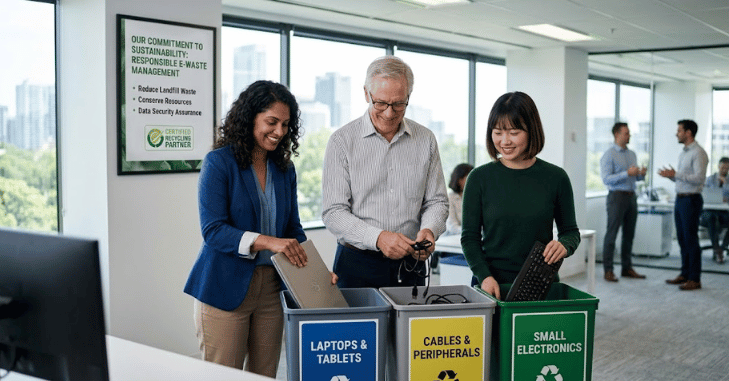
Corporate sustainability increasingly influences how businesses purchase equipment, manage resources and assess the environmental impact of their operations. While energy consumption and carbon emissions often receive significant attention, electronic waste is another important consideration. Computers, servers, communication devices and other technology products contain valuable materials and may require specialist treatment when they are no longer needed. Effective e-waste management helps organisations reduce unnecessary waste, improve resource efficiency and strengthen environmental accountability. Businesses exploring responsible technology disposal practices, including Zero Tech Waste solutions, can integrate e-waste management into broader sustainability planning and operational decision-making.
The Connection Between E-Waste and Sustainability
Electronic waste is generated when electrical or electronic products are discarded or enter waste treatment processes.
For businesses, this may involve outdated computers, damaged devices, replaced servers, or equipment removed during infrastructure upgrades.
Managing these products responsibly supports sustainability by reducing unnecessary disposal and encouraging the recovery of useful resources.
It also creates opportunities to reconsider how organisations purchase, maintain, and replace equipment throughout its lifecycle.
Understanding the Environmental Impact of Technology
The environmental impact of electronic equipment begins long before it becomes waste.
Manufacturing devices requires raw materials, energy, water and transportation. Some products also contain materials that require specialist handling at the end of their useful lives.
Replacing equipment unnecessarily can increase demand for additional manufacturing resources.
Sustainable technology management therefore involves considering both the use phase and the wider lifecycle of electronic products.
Reducing Waste Generation
Waste reduction is an important part of corporate sustainability.
Businesses can reduce electronic waste by maintaining devices, repairing suitable equipment and avoiding unnecessary replacement.
Extending product life may also reduce purchasing costs, although the financial outcome depends on maintenance requirements and operational suitability.
A structured asset management programme can help organisations identify which devices remain useful and which genuinely require replacement.
Supporting Reuse and Refurbishment
Reuse keeps suitable equipment in service rather than sending it straight to recycling or disposal.
Businesses may redeploy devices internally, transfer functioning equipment to other users or arrange refurbishment where appropriate.
These options can make better use of the materials and manufacturing resources already invested in electronic products.
However, reuse decisions should consider data security, technical condition, software compatibility and ongoing energy requirements.
Improving Material Recovery
When electronic equipment cannot reasonably be reused, recycling can help recover suitable materials.
Different recycling processes may recover metals, plastics and other components, depending on the equipment and available treatment methods.
Material recovery can reduce the waste requiring final disposal and support more efficient resource use.
Businesses should understand that recovery rates vary and that not every component can be recycled economically or technically.
Supporting Circular Economy Objectives
Circular economy principles focus on keeping products and materials in use for as long as practical.
For businesses, this may involve purchasing durable equipment, maintaining devices, replacing components and supporting responsible reuse.
Recycling provides another stage of resource recovery when equipment can no longer serve its intended purpose.
Integrating these principles into IT management can help organisations avoid unnecessary replacement and disposal.
Connecting E-Waste Management With ESG StrategiesConnecting E-Waste Management With ESG Strategies
Environmental, social, and governance considerations shape how some organisations assess their broader responsibilities.
Electronic waste management is particularly relevant to environmental performance, but it can also involve governance considerations such as supplier oversight, documentation and responsible decision-making.
Businesses may incorporate electronic waste measures into internal sustainability programmes or wider reporting frameworks.
Any published claims should reflect reliable information and the actual outcomes of waste management activities.
Establishing Measurable Sustainability Objectives
Sustainability goals are more useful when organisations can evaluate progress.
Businesses may monitor the quantity of electronic equipment generated, the number of devices reused, and the amount sent for recycling.
They can also review purchasing and replacement practices to identify opportunities to prevent waste.
Clear measurement methods help organisations compare performance over time and avoid broad claims that are hard to verify.
Improving Supplier Accountability
External contractors often play an important role in electronic waste management.
Businesses should understand the services provided, relevant authorisations and arrangements for handling equipment after collection.
Supplier assessments may consider environmental practices, documentation, treatment processes and information security procedures.
Responsible oversight helps organisations maintain greater confidence in their waste management arrangements.
Encouraging Collaboration Between Departments
E-waste management is not solely an IT responsibility.
Procurement teams influence purchasing decisions, facilities teams may coordinate storage and collections, and sustainability teams may monitor environmental performance.
Finance and information security departments may also have important roles.
Collaboration between these functions can help establish consistent procedures and reduce gaps in responsibility.
Creating Employee Awareness
Employees can support sustainability objectives by following procedures for damaged, outdated, or unwanted equipment.
Clear internal guidance helps prevent employees from discarding devices incorrectly or storing them indefinitely.
Awareness activities can explain the importance of repairing, reusing, recycling, and handling equipment securely.
When employees understand how their actions contribute to broader sustainability goals, electronic waste management can become a more consistent part of workplace practice.
Avoiding Unsupported Environmental Claims
Businesses should be cautious when describing electronic waste initiatives as environmentally beneficial.
For example, stating that all collected equipment has been recycled may be inaccurate if some materials require alternative treatment.
Similarly, companies should support estimated environmental savings with appropriate methodologies.
Transparent reporting matters more than exaggerated claims because it helps stakeholders understand what has actually been achieved.
Making E-Waste Management a Long-Term Priority
Effective electronic waste management requires ongoing attention, not occasional disposal projects.
Organisations can review equipment replacement policies, maintain asset inventories, and establish regular procedures to assess unwanted technology.
Periodic evaluation helps identify whether waste generation is increasing and whether additional reuse opportunities exist.
This long-term approach supports more consistent resource management and can strengthen broader sustainability planning.
Frequently Asked Questions (FAQs) About E-Waste Management and Sustainability
How does e-waste management support corporate sustainability?
It supports sustainability by encouraging waste prevention, equipment reuse and responsible material recovery. These activities can help organisations manage resources more efficiently and reduce unnecessary disposal.
Can electronic waste recycling reduce environmental impact?
Yes. Recycling can recover useful materials and reduce the waste that requires final disposal. The environmental benefits depend on the materials involved and the processes used.
What is the relationship between e-waste and ESG?
Electronic waste management can support environmental objectives and governance practices, including supplier oversight, documentation, and responsible resource management. Its relevance depends on an organisation’s ESG priorities and reporting framework.
How can companies measure e-waste performance?
Companies can track equipment quantities, reuse rates, recycling outcomes, and waste-generation trends. Reliable records help organisations evaluate progress and support accurate sustainability reporting.
Why is equipment reuse important for sustainability?Why is equipment reuse important for sustainability?
Reuse extends the useful life of suitable devices and can reduce the need for immediate replacement. This helps make better use of existing resources and may reduce waste generation.